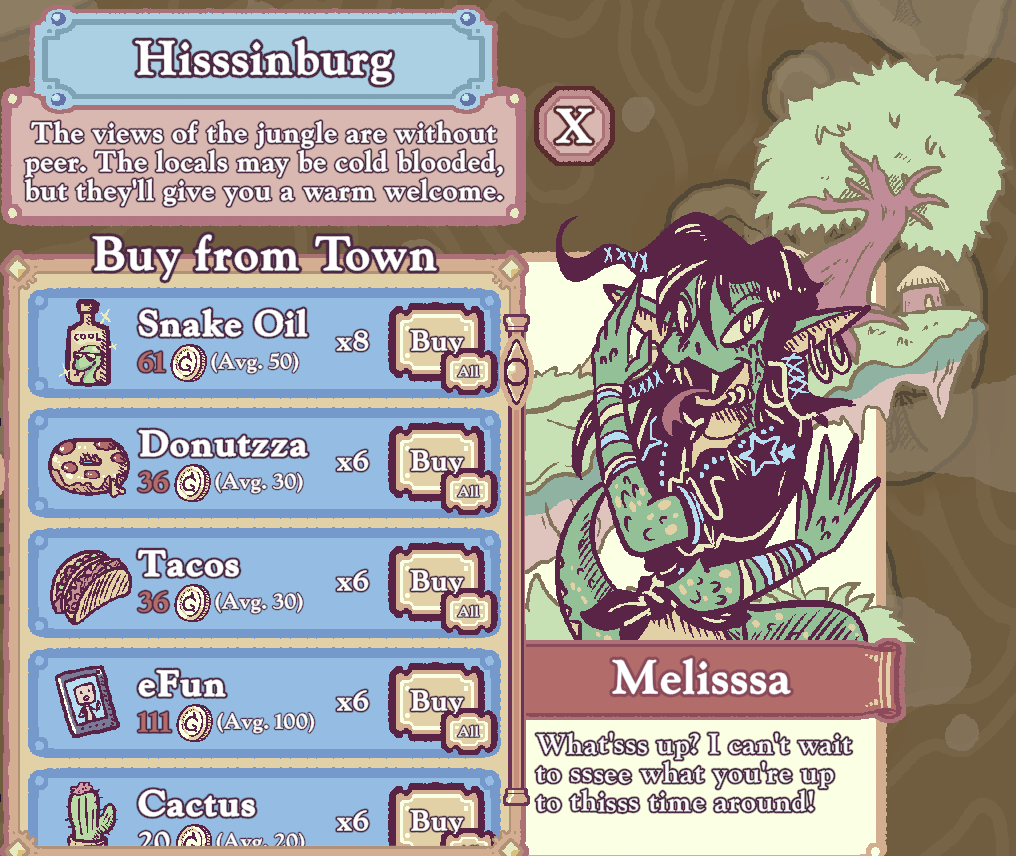
Since trading/markets is a huge part of Townseek, my Kumu network represents trading relationships in the game. I've selected a couple towns where trading occurs, and the network shows some items, prices, and characters of that town's trading center. Colors are prices and shapes are types.
Aspects of the Game
Setting/Map
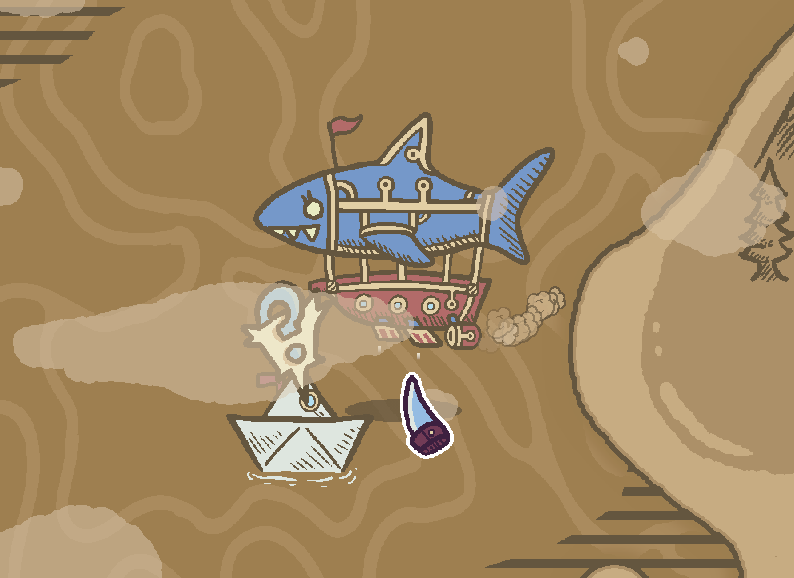
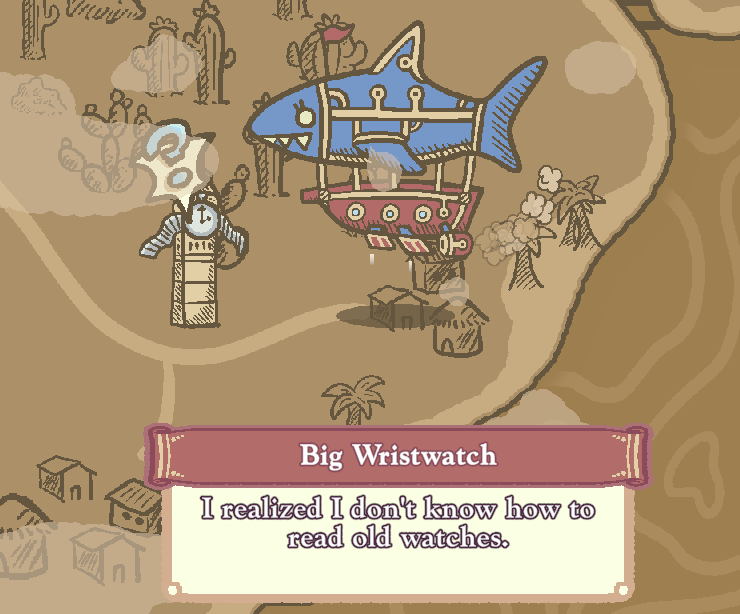
The map features little landmarks such as this paper ship that the player can interact with and read fun little dialogues.
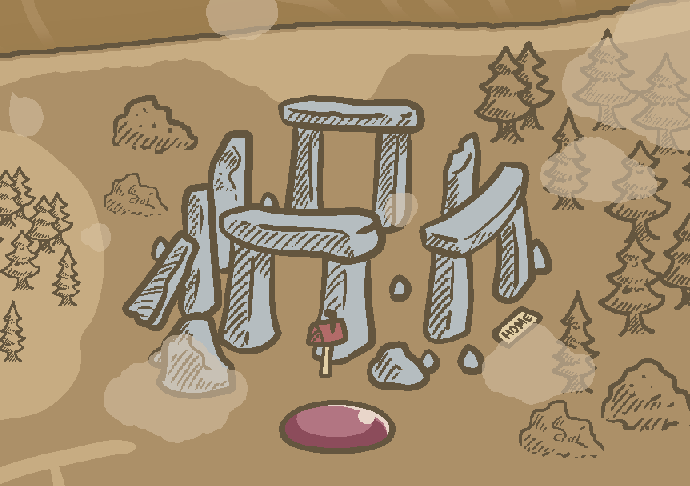
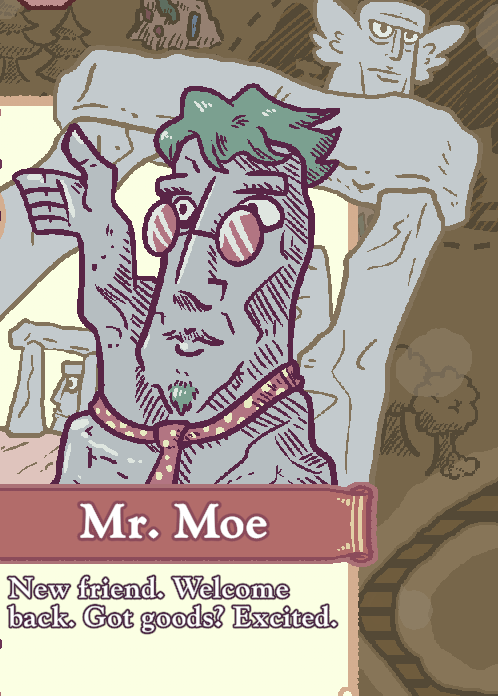
The world is divided into several themed regions, with unique colors, buildings, and NPCs. For example, the player can distinguish that this is Stonehengeopolis, the town that is stone-themed, based on the buildings and trader.
Graphics/Audio/Media
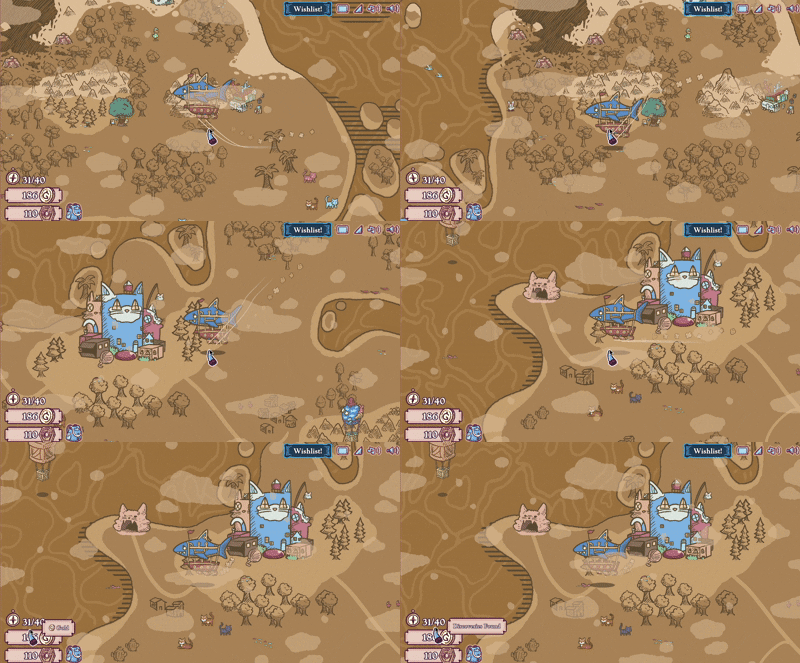
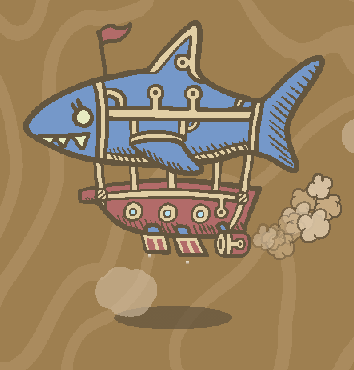
The game uses simple 2D graphics with soft colors and minimalistic art, which contributes to its relaxing vibe. Soft, cutesy music is playing in the background with additional sound effects during interactions.There are small animated details, such as animals moving and clouds drifting, which really bring the graphics to life. Another cool part of this is that the cursor is actually a shark tooth, which matches the player's character as a shark airship.
Characters
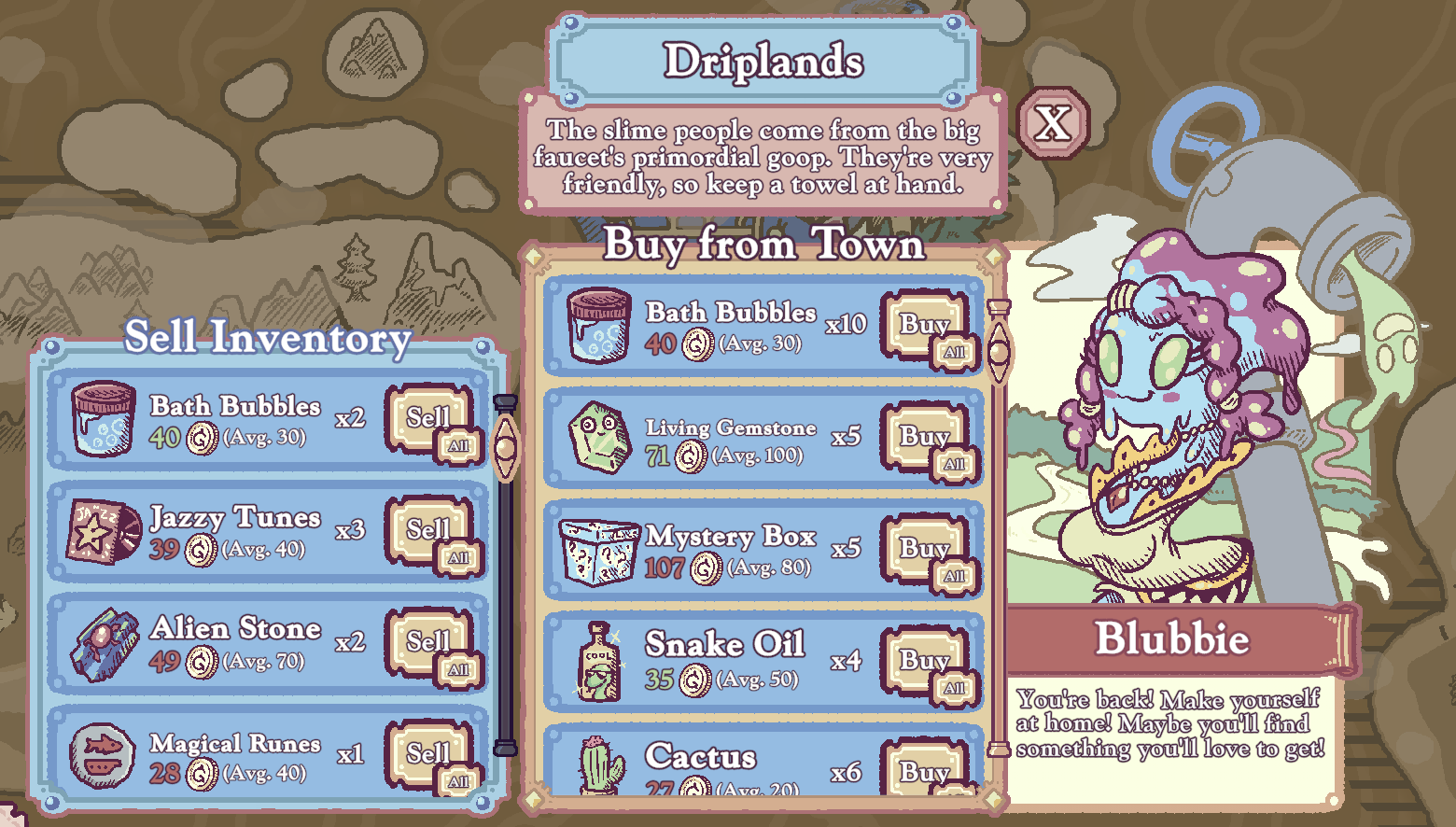
You control one character in this game, which is the pilot in the airship. The player's character isn't deeply developed, but you get to know them based on how NPCs treat you — as a friendly, curious traveler. The focus on the game is not on the character itself, but its interactions with others.NPCs in this game are mostly shopkeepers or town representatives, so interactions with them usually involve buying and selling items and providing information about their town's theme. There aren't many storylines to them — they're all just friendly NPCs to interact with.
As mentioned earlier, there are little characters scattered around the map that the player can interact with. These NPCs don't really contribute to the game itself, but they do make silly jokes and comments which contribute to the game's playful aesthetic.
Objects
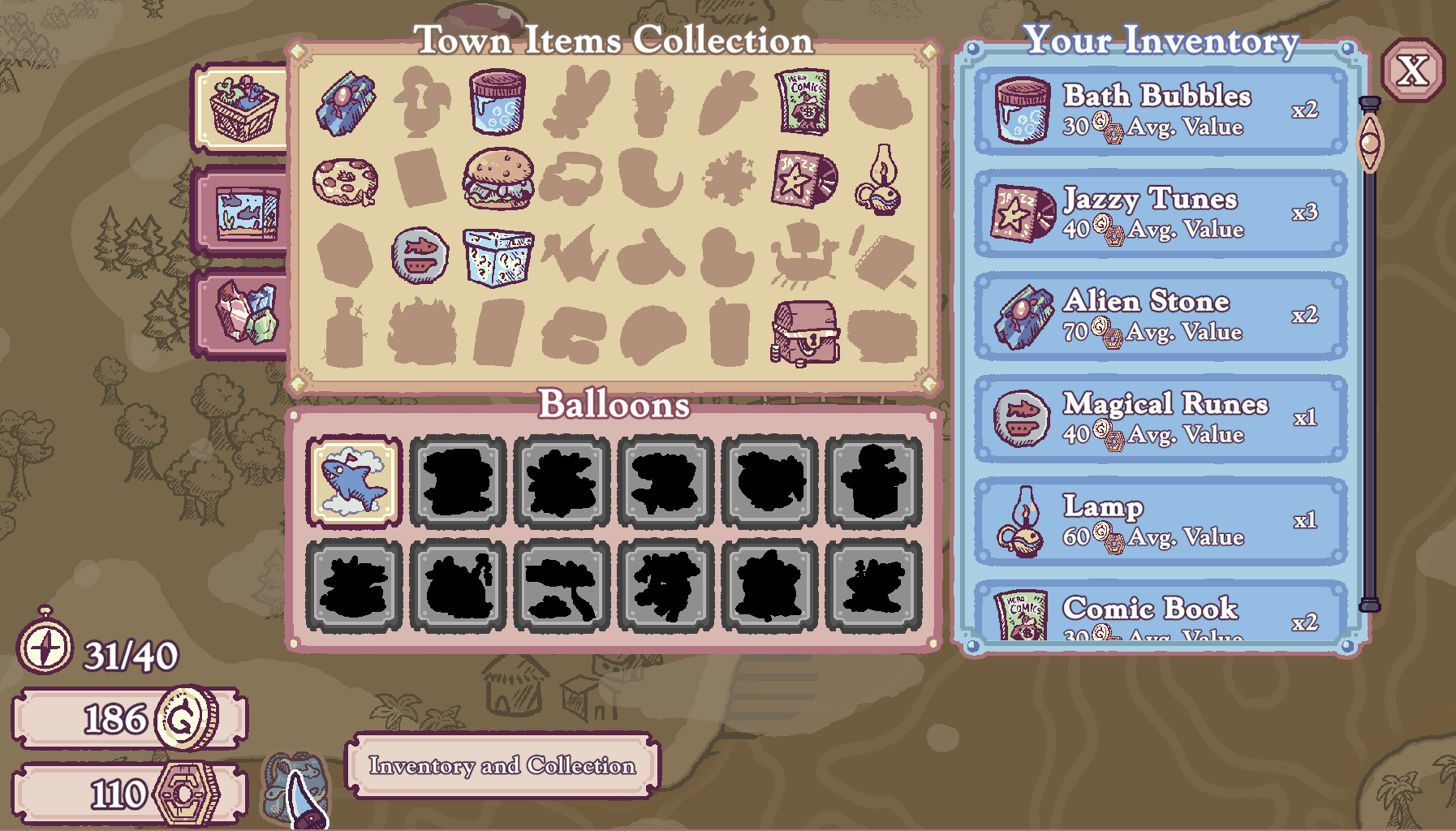
You can check out your inventory, which is where all the items you buy/collect are stored. These objects include trade goods (fish, crafts, themed objects, food items), as well as ship upgrades.
Challenges
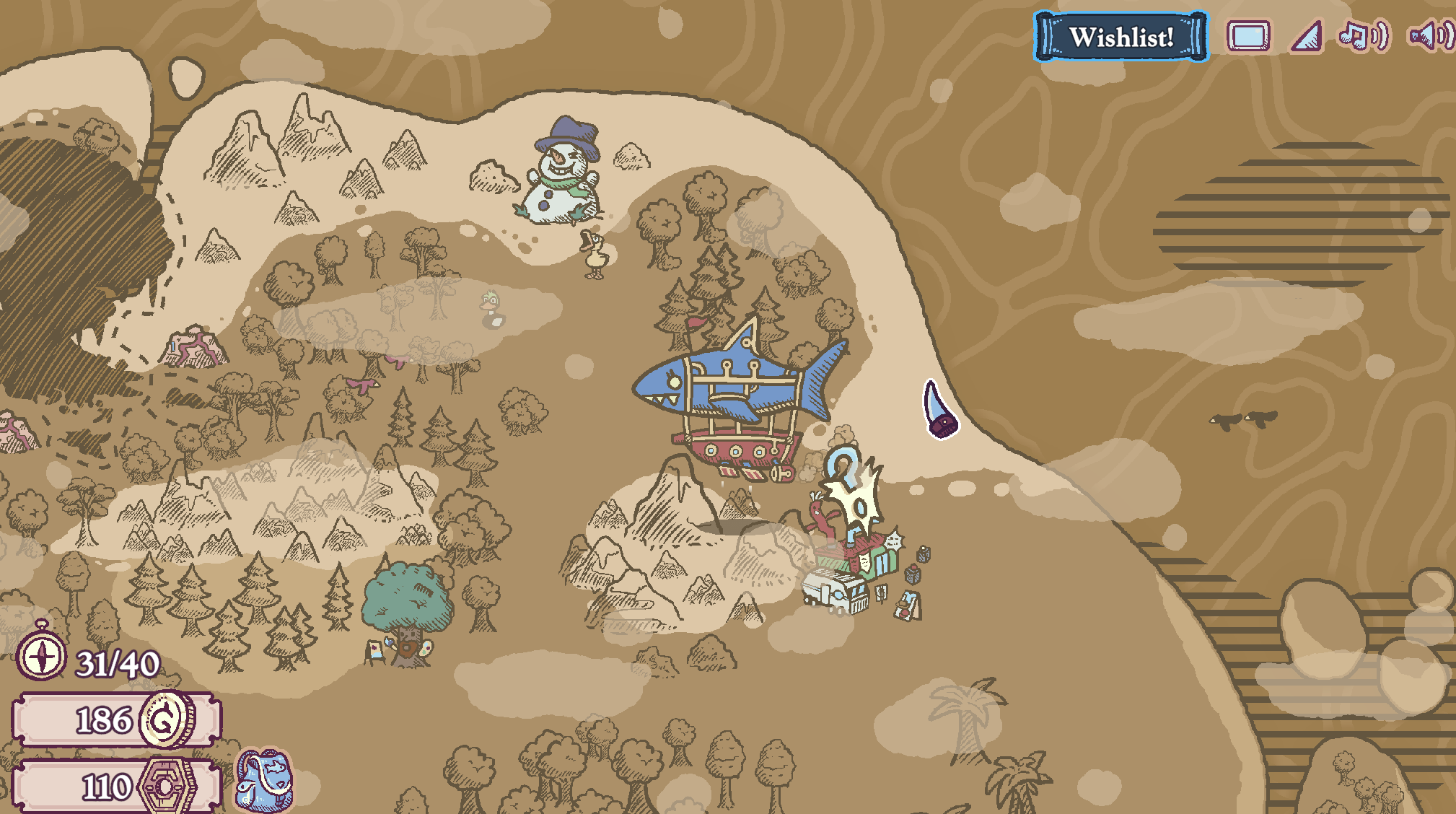
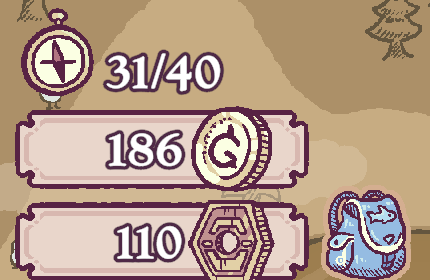
The main challenge of the game is economic exploration, specifically through identifying which towns want certain goods, discovering towns, and expanding your list of resources.Progress comes from earning money, collecting more items, and discovering new areas. For example, here I have discovered 31 out of 40 possible interactable locations on the map. The game uses two currencies: gold and gamis. Gold is used for basic transactions, while gamis reward exploration and long-term engagement, adding an extra layer of motivation beyond simple buying and selling.
Game Review
Townseek reflects real-world ideas of travel and trade through its system of region-specific goods and interconnected towns, but it presents these systems in a simple, low-pressure way. Instead of competition or conflict, the game emphasizes curiosity, movement, and discovery. This, along with the games art/music style, makes the experience feel relaxing and optimistic rather than demanding. Some towns in the game reference real-world cultures (ex. The Empire being Japan, Shibuyork being a combination of Shibuya and New York), with the game itself reflecting real-world economic ideas such as supply and demand, trade, and regional specialization. The game could improve by deepening storylines (for the NPCs and the player character), trading systems, and quests. This would allow for a more fun gameplay and keep the player engaged for longer.